Progressive Gymnasium Education in Karachaevsk: Values, Practices, and Regional Innovations
Karachaevsk sits at the foothills of the Caucasus, where mountain landscapes, rich cultural traditions, and close-knit communities create an education environment ripe for progressive approaches. Gymnasiums—Russia’s academically focused secondary schools—have a special role here: to combine rigorous scholarship with local identity, civic responsibility, and future-ready skills. This article outlines the core values of gymnasium education, practical progressive practices, and region-specific innovations that can strengthen learning outcomes for Karachaevsk’s youth.
Core values of gymnasium education in Karachaevsk
— *Academic excellence*: deep content knowledge across humanities, mathematics, and sciences, with pathways to higher education.
— *Civic and cultural identity*: preserving and transmitting local languages, folklore, and community traditions while nurturing open-minded citizens.
— *Holistic development*: cultivating critical thinking, creativity, socio-emotional skills, and physical health.
— *Inclusivity and equity*: ensuring students from diverse backgrounds—rural, linguistic, economic—have equal access to quality instruction.
— *Community relevance*: anchoring learning in local realities so education serves both personal aspiration and regional development.
Progressive practices that amplify gymnasium values
1. Inquiry-based and project learning
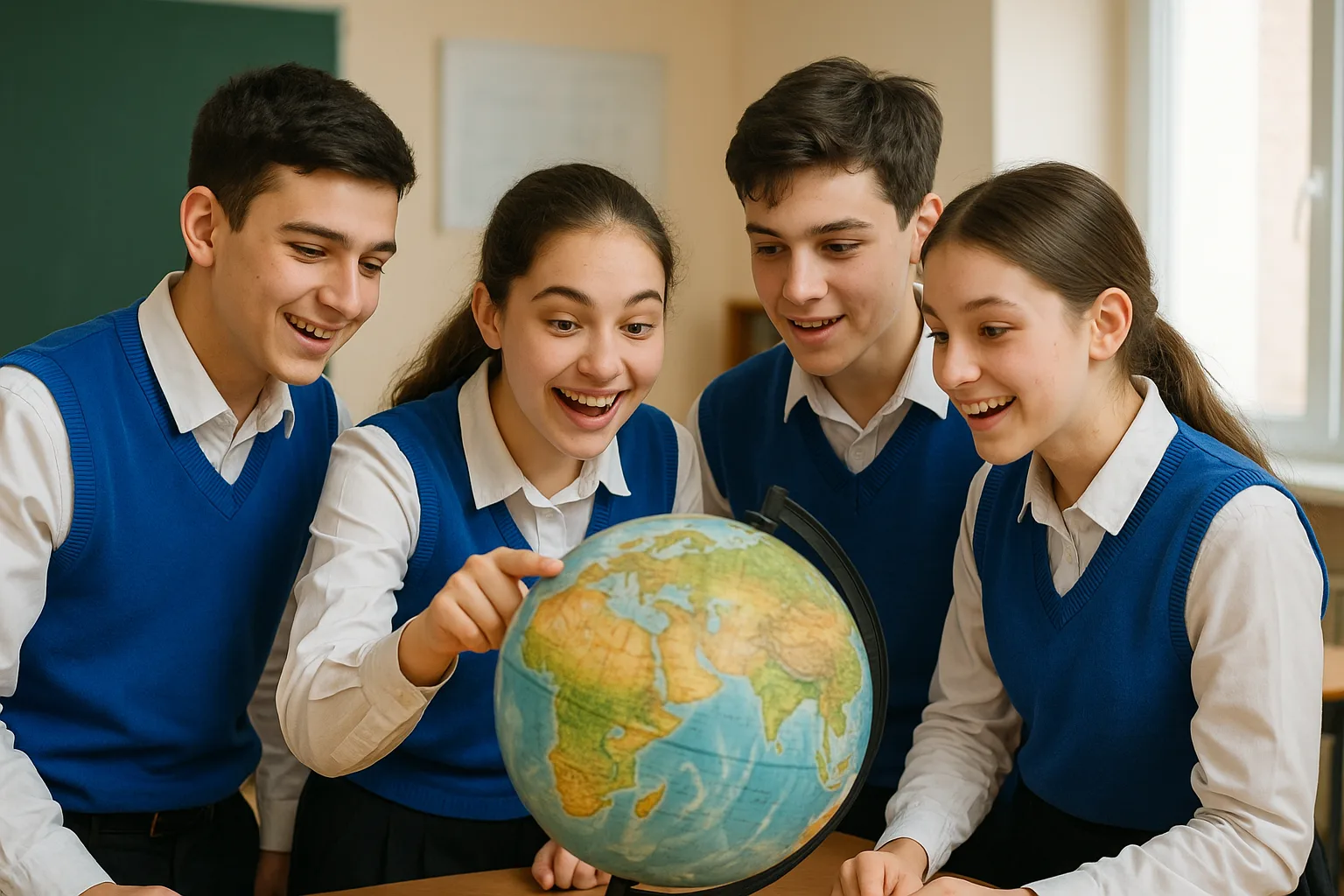
— Students explore locally meaningful questions (e.g., mountain ecology, local history) through sustained projects that integrate science, language, and the arts.
— Outcomes: deeper retention, cross-disciplinary skills, portfolio evidence for university admission.
2. Differentiated and competency-based instruction
— Flexible pacing and mastery checks let students progress on demonstrated competencies rather than seat time.
— Use rubrics, formative feedback, and personalized learning plans.
3. Blended learning and digital literacy
— Combine classroom instruction with curated online resources to expand course offerings (advanced math, foreign languages) despite geographic constraints.
— Emphasize digital citizenship and media literacy.
4. Collaborative and peer-led learning
— Small-group seminars, peer tutoring, and student-led workshops develop communication and leadership.
— Encourage inter-grade mentorship to build community and continuity.
5. Place-based and outdoor education
— Regular outdoor classrooms, eco-camps, and field-based science tie learning to Karachaevsk’s mountains and biodiversity.
— Builds stewardship and experiential understanding.
6. Formative assessment and reflective practice
— Frequent low-stakes assessments, portfolios, and student self-evaluation guide instruction and growth.
— Teachers use evidence to adjust lessons and provide targeted support.
7. Arts and language integration
— Preserve and teach Karachay-Balkar and other local languages through music, storytelling, and drama integrated into curricula.
— Arts-based methods boost engagement and cultural continuity.
Regional teaching innovations already suitable for Karachaevsk
— Multilingual curriculum strands that balance Russian, local languages, and international language study—supporting identity and future mobility.
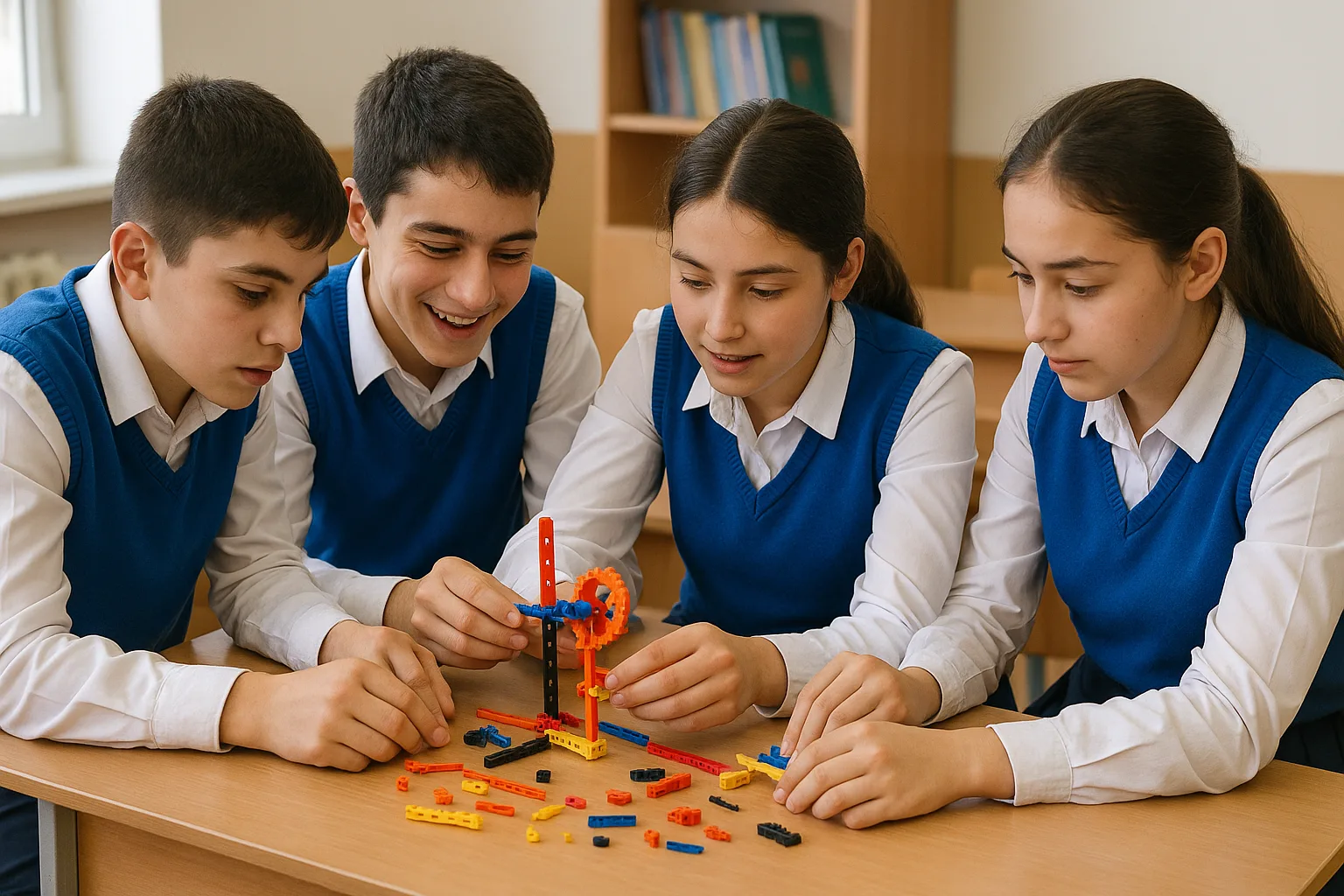
— Mobile resource labs and shared equipment pools (science kits, maker tools) that rotate between small schools in mountain settlements.
— Community apprenticeship projects linking students to local tourism, agriculture, conservation, and craft enterprises.
— Teacher micro-credentials and local professional learning networks that focus on mountain pedagogy, bilingual instruction, and digital tools.
— Green school initiatives: small-scale renewable energy for classrooms, school gardens, and watershed projects that teach sustainability through action.
Practical steps for implementation
1. Start with a pilot
— Choose one or two gymnasiums to run an academic year-long pilot combining inquiry projects, blended learning modules, and outdoor education.
2. Build partnerships
— Engage parents, local cultural leaders, regional universities, and NGOs for expertise, equipment, and internship opportunities.
3. Invest in teacher development
— Offer hands-on workshops, peer observations, and time for collaborative curriculum design focused on local needs.
4. Use low-cost technology wisely
— Prioritize offline-capable content, local caching servers, and shared devices to overcome connectivity gaps.
5. Measure what matters
— Track competency mastery, student portfolios, participation in community projects, and post-graduation pathways, not just test scores.
Benefits and anticipated outcomes
— Stronger student engagement and retention as learning connects to local identity and real-world problems.
— Expanded access to advanced courses through blended and shared resources.
— Preservation and revitalization of local languages and cultural practices.
— More resilient communities as youth gain relevant vocational and civic skills.
— Increased teacher satisfaction and professional growth.
Challenges and mitigation
— Resource constraints: pool regional funds, apply for grants, and prioritize scalable low-cost solutions.
— Teacher workload and capacity: phase changes gradually, provide planning time, and use mentor-teacher models.
— Connectivity and infrastructure: blend online with offline resources and use mobile labs.
— Assessment alignment: negotiate with regional education authorities to validate portfolios and competency evidence alongside traditional exams.
Recommendations for scaling across the Karachay-Cherkess region
— Create a regional innovation hub to document pilots, curate lesson packages, and organize teacher exchanges.
— Standardize a core competency framework aligned with gymnasium goals but flexible to local adaptation.
— Launch a small grants program for school-community micro-projects (eco-initiatives, bilingual textbooks, maker spaces).
— Promote student showcases and regional fairs to celebrate learning and attract community support.
Conclusion
Karachaevsk’s gymnasiums can become powerful engines of both academic rigor and community vitality by marrying progressive pedagogy with local culture and environment. With targeted pilots, strong partnerships, and teacher-led innovation, the region can develop schooling that prepares students for higher education and meaningful participation in their home communities—preserving heritage while opening doors to the future.
For schools ready to begin: prioritize a small, visible pilot that links curriculum to a local challenge, secure one or two committed partners, and build teacher capacity around inquiry-based practice. The mountain context is not a limitation—it’s a rich resource for progressive, place-based education.